
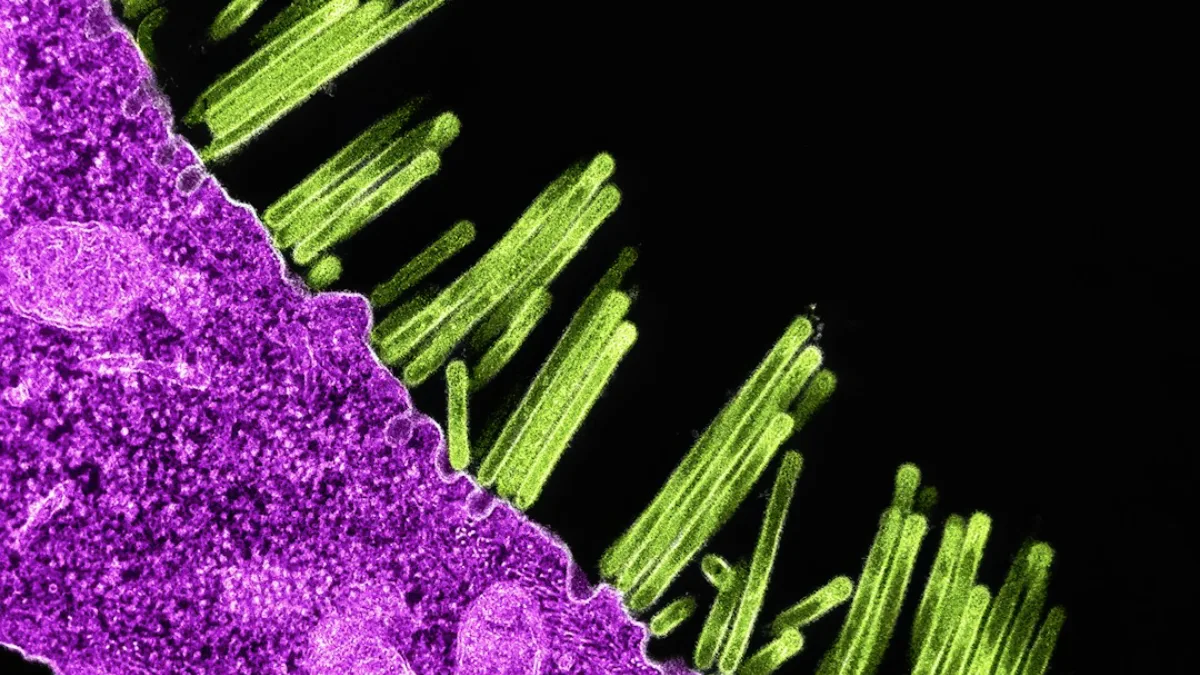
Understanding the fundamental differences between prokaryotic and eukaryotic cells is paramount for comprehending the diversity of life on Earth. These distinctions extend beyond mere size, encompassing intricate variations in genetic organization, cellular compartmentalization, and bioenergetic strategies, shaping their evolutionary trajectories and ecological roles.
Quick Summary / Key Takeaway
Prokaryotes lack a nucleus and membrane-bound organelles, featuring a nucleoid region and simpler genetic machinery. Eukaryotes possess a true nucleus, extensive endomembrane systems, and specialized organelles like mitochondria, enabling greater complexity and size.
Fundamental Structural Divergence
Defining the Nucleoid vs. Nucleus
The most striking divergence lies in the organization of genetic material. Prokaryotic cells, encompassing Bacteria and Archaea, lack a membrane-bound nucleus. Their single, circular chromosome resides in a region called the nucleoid, which is not enclosed by a membrane. This fundamental difference dictates many subsequent cellular processes.
Conversely, eukaryotic cells are defined by the presence of a true nucleus, a double-membraned organelle that houses their linear chromosomes. This compartmentalization physically separates transcription from translation, allowing for more sophisticated gene regulation and processing.
Compartmentalization and Efficiency
Eukaryotic cells exhibit a high degree of internal compartmentalization through a complex endomembrane system. This includes organelles like the endoplasmic reticulum, Golgi apparatus, lysosomes, and vacuoles, each performing specialized functions. This division of labor enhances cellular efficiency and allows for larger cell sizes.
Prokaryotes, while lacking these extensive internal membrane systems, still possess some internal structures. However, their overall architecture is simpler, with most metabolic processes occurring in the cytoplasm or associated with the plasma membrane. This structural simplicity is intrinsically linked to their smaller size and rapid reproduction.
Genetic Architecture and Expression
Coupled vs. Decoupled Expression
A critical distinction lies in how genetic information is processed. In prokaryotes, transcription and translation are coupled processes. As mRNA is synthesized from DNA in the cytoplasm, ribosomes can immediately begin translating it into proteins, often while transcription is still ongoing.
In eukaryotes, the nuclear envelope separates transcription (in the nucleus) from translation (in the cytoplasm). This decoupling allows for extensive post-transcriptional modification of mRNA, such as splicing, capping, and polyadenylation, which are essential for regulating gene expression and producing mature mRNA molecules.
Operons vs. Introns
Prokaryotic genomes often feature operons, which are clusters of genes that are transcribed together into a single polycistronic mRNA molecule. This arrangement allows for the coordinated expression of functionally related proteins, facilitating rapid adaptation to environmental changes.
Eukaryotic genes, in contrast, are typically monocistronic, meaning each gene is transcribed into its own mRNA. Furthermore, eukaryotic genes are frequently interrupted by non-coding sequences called introns, which are removed during mRNA processing. This complexity in gene structure contributes to the intricate regulation of gene expression in eukaryotes.
Bioenergetics and Scaling Limits
Surface-Area-to-Volume Constraints
Prokaryotic cells are generally limited in size by their surface-area-to-volume ratio. As a cell grows, its volume increases faster than its surface area. This constraint impacts the efficiency of nutrient uptake and waste removal, as diffusion alone becomes insufficient to support larger cellular masses.
This fundamental limitation explains why most prokaryotes are microscopic. Their small size ensures that essential molecules can diffuse rapidly to all parts of the cell, and waste products can be efficiently expelled across the plasma membrane.
The Role of Mitochondria
Eukaryotic cells overcome bioenergetic scaling limits through the presence of specialized organelles, most notably mitochondria. Mitochondria are the primary sites of aerobic respiration and ATP synthesis, generating significantly more energy than can be achieved through plasma membrane-based processes alone.
The development of mitochondria, as explained by the endosymbiotic theory, provided eukaryotes with a highly efficient energy-generating system. This allowed for the evolution of larger cell sizes and the development of complex multicellular organisms, overcoming the diffusion limits faced by prokaryotes.
The Archaea and Planctomycetes Anomalies
Why Archaea Aren’t Just Bacteria
While Archaea share some superficial similarities with Bacteria (e.g., lack of a nucleus), they represent a distinct domain of life. A key difference lies in their membrane lipid composition; Archaea utilize ether-linked lipids, whereas Bacteria and Eukaryotes use ester-linked lipids. This biochemical distinction has profound implications for their membrane structure and function.
Furthermore, Archaea possess unique genetic and biochemical pathways that set them apart from Bacteria, including distinct RNA polymerase structures and ribosomal protein compositions. These differences underscore their evolutionary divergence.
Internal Membranes in Prokaryotes
The notion that prokaryotes entirely lack internal membrane systems is challenged by certain groups, such as Planctomycetes. Some Planctomycetes species exhibit internal membrane-bound compartments, like the anammoxosome, which houses the anaerobic ammonium oxidation process. This demonstrates that internal compartmentalization is not exclusively a eukaryotic trait.
These findings highlight the complexity and diversity within the prokaryotic domains, suggesting that evolutionary pathways towards compartmentalization may have emerged independently in different lineages. For instance, some photosynthetic bacteria, like Cyanobacteria, have internal membrane structures for light harvesting.
Evolutionary Origins: The Endosymbiotic Theory
Alphaproteobacteria Engulfment
The endosymbiotic theory provides a compelling explanation for the origin of key eukaryotic organelles, particularly mitochondria and chloroplasts. It posits that these organelles were once free-living prokaryotes that were engulfed by an ancestral eukaryotic cell and established a symbiotic relationship.
Specifically, mitochondria are believed to have originated from the engulfment of an alphaproteobacterium. This ancient event endowed the host cell with the capacity for efficient aerobic respiration, a crucial step in the evolution of complex life.
Evidence in Organelle DNA
Strong evidence for the endosymbiotic theory comes from the genetic material within these organelles. Mitochondria and chloroplasts contain their own circular DNA, similar to the DNA found in bacteria. This organelle DNA is distinct from the nuclear DNA of the eukaryotic cell.
Furthermore, the ribosomes found within mitochondria and chloroplasts are 70S ribosomes, which are characteristic of prokaryotic ribosomes, rather than the larger 80S ribosomes found in the eukaryotic cytoplasm. These molecular similarities provide robust support for their prokaryotic ancestry.
Summary Comparison Matrix
Quick-Reference Data
A concise comparison of key features offers a rapid overview of the fundamental differences between prokaryotic and eukaryotic cellular structures and functions. This matrix serves as a valuable reference for quick recall and understanding.
Frequently Asked Questions
What is the primary difference between prokaryotic and eukaryotic cells?
The primary difference is the presence of a true nucleus and membrane-bound organelles in eukaryotic cells, which are absent in prokaryotic cells. Prokaryotes have a nucleoid region for their DNA and simpler internal structures.
Are all prokaryotes the same?
No, prokaryotes are divided into two distinct domains: Bacteria and Archaea. While they share a basic cellular plan, they have significant biochemical and genetic differences, with Archaea often exhibiting unique adaptations.
How do eukaryotic cells generate energy?
Eukaryotic cells primarily generate energy through cellular respiration in mitochondria, which are highly efficient ATP-producing organelles. Photosynthesis in chloroplasts also contributes energy in plant and algal cells.
Why are prokaryotes generally smaller than eukaryotes?
Prokaryotes are limited by their surface-area-to-volume ratio, which restricts nutrient uptake and waste removal. Eukaryotes overcome this with specialized organelles like mitochondria, allowing for larger sizes.
What is the endosymbiotic theory?
This theory explains the origin of mitochondria and chloroplasts as once-free-living prokaryotes that were engulfed by ancestral eukaryotic cells, forming a symbiotic relationship that benefited both.
Do any prokaryotes have internal membranes?
Yes, some prokaryotes, like certain Planctomycetes, possess internal membrane-bound compartments, challenging the notion that internal compartmentalization is exclusively eukaryotic.